India PC shipment growth and the upgrade decision
India's Q2 2026 PC growth: read the shipment figure before buying
India's Q2 2026 PC shipment growth is useful market context. Read the period, segment and measure before turning it into a buy-now or wait decision.
A growing PC market can still leave an individual buyer with a difficult upgrade decision. The useful question is how the research changes the checks you make on a quote—not whether a growth headline supplies a deadline for buying.
That distinction matters to real shoppers. One Indian buyer asked whether to build now or wait, while balancing a fixed budget and changing priorities. It is one person’s question, not a representative survey or verified price history. It does show why a market story needs a practical interpretation.
What the India shipment figures show
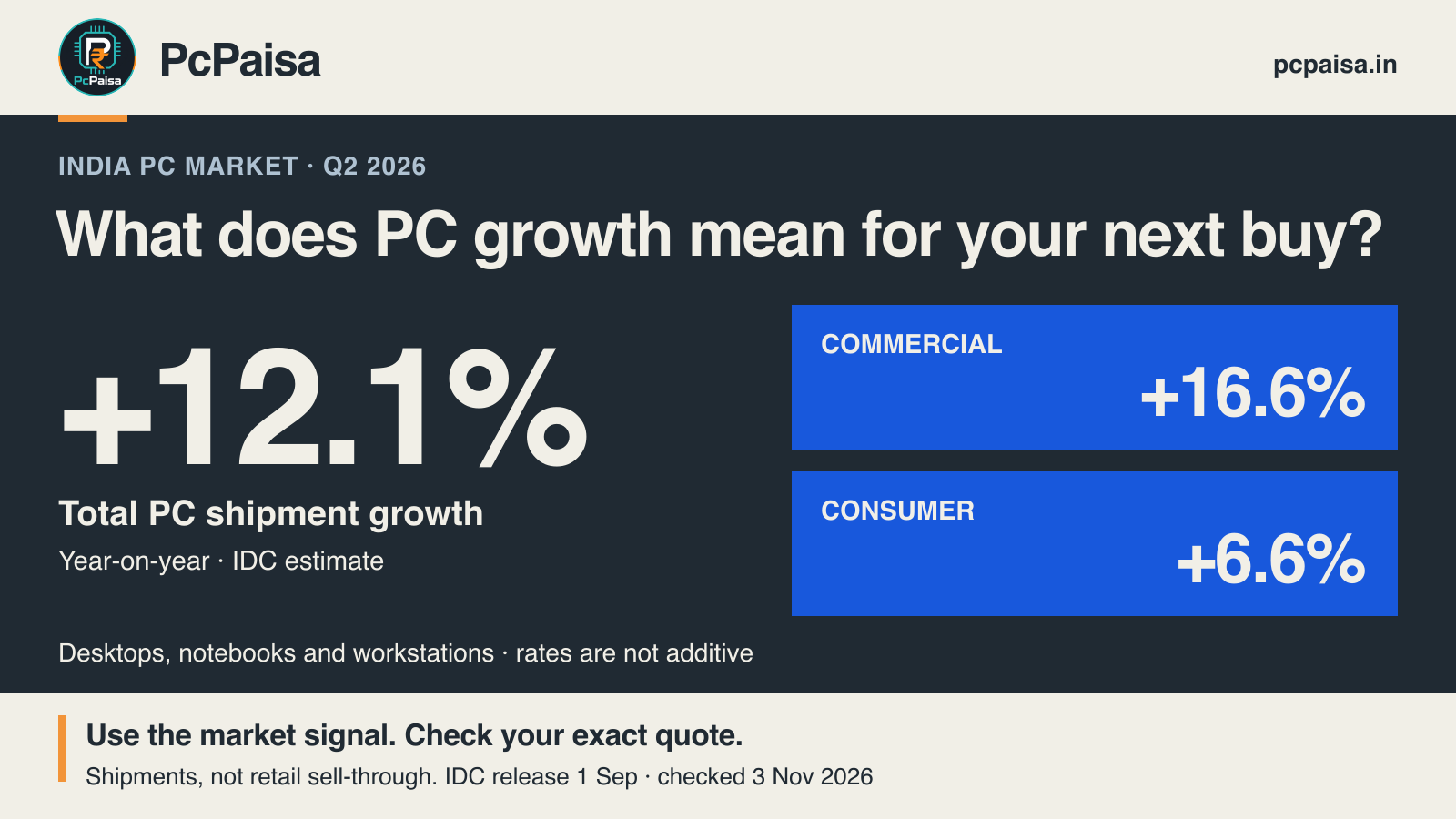
IDC’s 1 September release estimates India’s traditional PC shipments rose 12.1% year on year in Q2 2026. This category covers desktops, notebooks and workstations.
| IDC segment | Q2 2026 shipment growth versus Q2 2025 |
|---|---|
| Total traditional PCs | 12.1% |
| Commercial | 16.6% |
| Consumer | 6.6% |
These segment growth rates do not add together. IDC describes channel stocking and forward purchases. Historical shipments are not a November demand reading.
Read the measure before the conclusion
To interpret a market number, keep three labels attached: what was counted, where, and when. A unit shipment, a rupee of sales and a percentage price change answer different questions. A notebook market and the market for a particular desktop memory kit also have different boundaries.
A hypothetical example makes the inventory distinction easier to see. A retailer receives ten PCs but sells six during the same interval. The arrival of ten units and six customer purchases can both be true. This is an illustration, not a claim about the inventory of any Indian retailer.
For a buyer, the missing link is the offer actually available to you. A national shipment total does not state the seller, full part number, invoice terms, delivery time or payable price on your own quote. A stronger commercial segment also does not tell you that a particular gaming build has become better value.
The outlook deserves attention too
The strongest counterpoint is that broader research can still reveal risks worth monitoring. Omdia’s India release dated 1 October forecast a 22% decline for the second half of 2026. That is an outlook, not a completed result. It also estimated Q2 shipments differently from IDC: 4.1 million units and 14% growth.
Do not average the two trackers into a supposedly more precise number. Their public releases do not provide enough detail to reconcile the estimates fully here. Reading both offers context and a reason to watch the next release; it does not produce a forecast for the price of your shortlisted component.
Turn the market story into a better quote
PcPaisa’s practical approach is to make the next decision inspectable:
- Define the job and need date. Write down the work or games the machine must handle and when the existing setup stops being adequate. An urgent replacement and an optional upgrade have different costs of waiting.
- Freeze the configuration before comparing. Record full model and variant codes, capacities, included parts and relevant support requirements. Two totals are hard to compare if the memory capacity or GPU version changed between them.
- Date the offer evidence. Keep the named seller, observation time, availability, delivery estimate and final-price conditions together. If discussing a price movement, compare the same variant and explain the sampled stores and time window.
- Set a review trigger. For an optional purchase, choose a date or an evidenced price target for checking again. For a work machine, ask whether delaying affects a real deadline. Avoid an indefinite wait based only on a national headline.
This is a decision process, not an instruction to buy immediately or a prediction that waiting will save money. We have not collected current retail quotes for this article, so there is no current-price or market-low recommendation.
What to watch next
Look for a newer India-specific shipment release, revisions to earlier estimates, and evidence about demand reaching end customers. Recheck your own unchanged parts list separately. Keeping those two records side by side makes the next market headline more useful without letting it replace the buying decision.
Sources reopened 3 November 2026. These are the publishers’ public research releases; full paid tracker datasets, detailed sampling methods and independent reproduction were not available. The bounded search found no newer India-specific IDC PC-quarter release. Sponsorship of the individual releases was not disclosed in the opened material. No hardware test, November shipment result or current Indian retail-price trend is claimed.
Put your shortlist to work
Catch a price drop on your next PC part.
Follow our Telegram channel for selected Indian PC-part price-drop alerts from PcPaisa’s tracked price history.
Join Telegram deal alerts